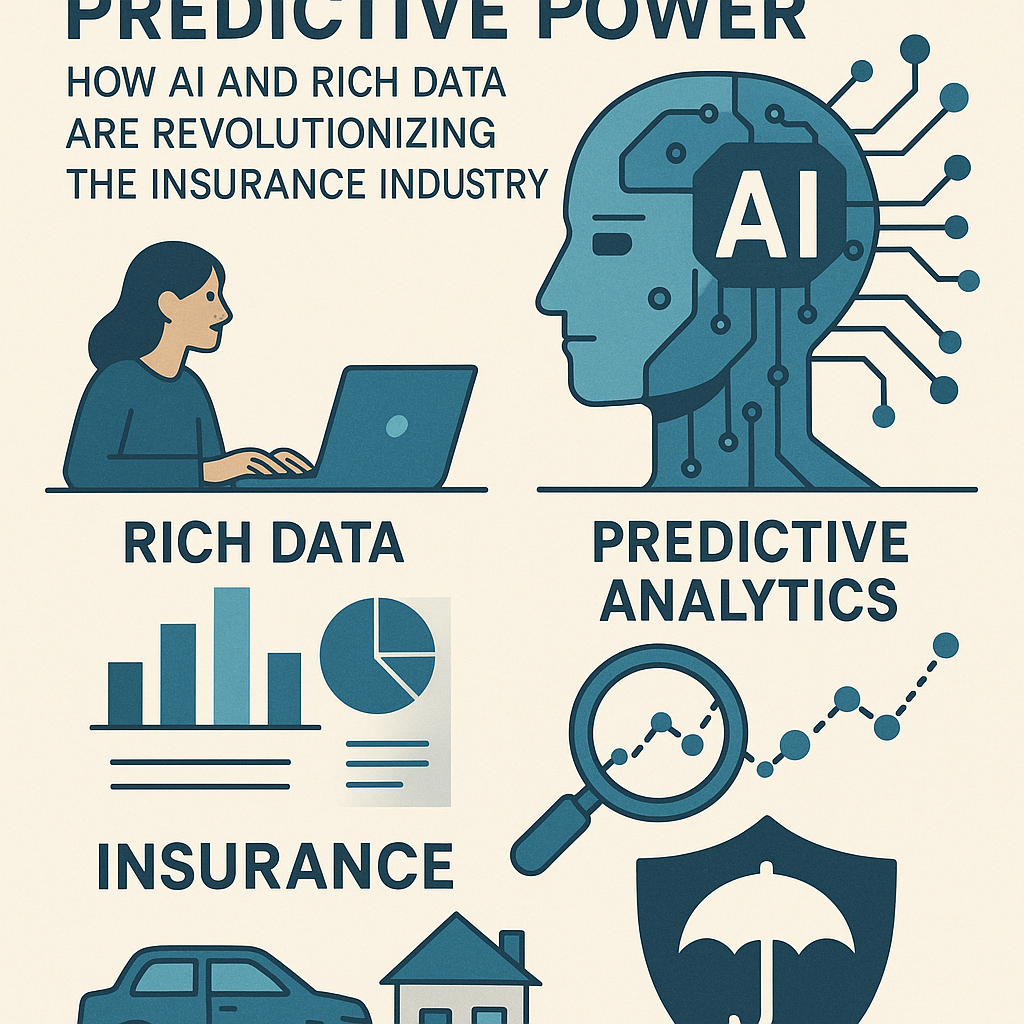
Unlocking Predictive Power in Insurance Through AI and Rich Data
Introduction
The insurance industry is undergoing a transformative shift powered by Artificial Intelligence (AI) and rich data analytics. This evolution is not only streamlining operations but also redefining customer engagement and risk management. In this blog post, we explore how these technologies are revolutionizing the landscape of insurance.
Section 1: The Transformative Power of Generative AI
Generative AI is reshaping underwriting processes by automating tedious administrative tasks, allowing insurers to gain more profound insights into risk assessment. For instance, Cloverleaf Analytics has launched the “Ethical AI for Insurance Consortium” to promote ethical discussions surrounding AI, which underscores the importance of responsible technology deployment. This proactive approach ensures that as technology advances, there’s a framework in place to monitor its ethical implications, fostering industry-wide trust among consumers.
Additionally, by leveraging generative AI, insurers can significantly enhance their predictive capabilities, leading to improved underwriting decisions and customer premiums. The ability to analyze vast amounts of data in real-time creates a competitive advantage, positioning companies that embrace this technology at the forefront of the industry.
Infographic: Generative AI Impact on Underwriting Efficiency
Visual: A flowchart illustrating the traditional vs. AI-optimized underwriting process, showcasing time savings and efficiency gains.
Section 2: Personalized Customer Engagement Through AI
Today, customer engagement is no longer a one-size-fits-all approach. AI-driven personalization helps insurers tailor communications and products based on individual customer needs, leading to higher satisfaction and retention rates. Companies utilizing this technology report significantly enhanced customer experiences, driving loyalty and deeper connections. For instance, personalized recommendations, targeted offers, and timely communication strategies can effectively nurture client relationships, ultimately translating into long-term profitability.
Moreover, AI can analyze customer behavior and preferences faster than traditional methods, allowing insurers to adapt their strategies agilely. By creating customized experiences, companies can resonate on a personal level with clients, ensuring that their interactions are relevant and compelling.
Visual: Customer Journey Map
Visual: An infographic depicting the customer journey enhanced by AI personalization, including personalized offers, automated responses, and feedback loops.
Section 3: Advancements in Risk Management and Fraud Detection
AI is at the forefront of improving risk profiles and detecting fraudulent activity. By automating claims processing and utilizing predictive analytics, insurers can respond faster and more accurately to claims, thereby minimizing losses. This capability becomes especially vital as cyber threats continue to escalate. The integration of machine learning algorithms allows insurers to identify patterns in data that indicate potential fraud, enabling them to take preventative measures and protect their bottom lines.
Furthermore, the proactive use of AI in risk management allows companies to underwrite more effectively. By assessing risks in real-time, insurance providers can create flexible policy offerings tailored to individual circumstances, thus appealing to a broader consumer base.
Section 4: Ethical Challenges in AI Implementation
Despite AI’s vast potential, a significant portion of the population remains skeptical about its use within the insurance sector. According to recent surveys, 59% of individuals express distrust or skepticism towards generative AI in insurance applications. Therefore, addressing customer sentiment and adhering to ethical standards is paramount for successful AI integration. Insurance companies must create transparent processes that inform clients about how their data is utilized and ensure compliance with prevailing regulations.
To overcome barriers of trust, companies must engage in open dialogues with stakeholders. Sharing case studies and testimonials highlighting successful AI implementations can demystify the technology and foster confidence amongst consumers, positioning insurers as leaders in ethical AI use.
Data Visualization: Trust Levels in AI Applications
Visual: A pie chart representing public trust in AI applications in insurance, highlighting the percentage of trust versus distrust.
Section 5: Future Market Growth Projections
The global insurance analytics market is poised for substantial growth, projected to rise from USD 8.8 billion in 2020 to USD 20.6 billion by 2026. This burgeoning market highlights the increasing investments insurers are willing to allocate to strengthen AI technologies aimed at enhancing operations and customer service. As the market expands, it will likely attract new entrants, fostering innovation and competitive dynamics that benefit consumers through better products and services.
Investors and industry leaders should keep a close watch on evolving technologies, as advancements in AI and data analytics are set to redefine operational standards. Companies that invest wisely in these areas will not only enhance their own operations but also contribute to the overall advancement of the insurance landscape.
Bar Graph: Market Growth Projections
Visual: A bar graph illustrating projected market growth from 2020 to 2026, broken down by year.
Conclusion: Embracing the AI Revolution in Insurance
As we stand on the brink of this technological revolution, it is vital for stakeholders to monitor the implications of AI in the insurance industry. By focusing on ethical standards, ensuring customer trust, and leveraging data-driven insights, stakeholders can navigate this evolving landscape to capitalize on opportunities in operational efficiency, risk management, and customer engagement. Future success will hinge on the ability to adapt to these changes while maintaining integrity and transparency throughout the process.
Social Media Updates
-
Tweet: “🌟 The insurance industry is evolving! Discover how AI and rich data are transforming operations & enhancing customer experiences. #Insurance #AI #DataAnalytics”
-
LinkedIn Post: “Unlocking predictive power in insurance isn’t just a trend; it’s the future! Explore our latest insights into how AI and rich data are revolutionizing underwriting, risk management, and customer engagement. 🤖💡 #InsuranceIndustry #AI #Innovation”
-
Instagram Update: “📈🤖 How is AI reshaping the insurance landscape? Swipe to see how personalized engagement and risk detection are becoming game-changers! #InsuranceRevolution #AI #DataDriven”
-
Facebook Post: “As AI technology continues to advance, the insurance sector is witnessing remarkable transformations. Learn how AI and rich data analytics are enhancing operational efficiencies and customer interactions in our latest blog post! #Insurance #AI”
Multimedia Elements: In addition to infographics and visualizations, consider including short video clips showcasing real-life applications of AI in the insurance sector, interviews with industry experts, and customer testimonials discussing their experiences with AI-driven insurance products.
This comprehensive content approach can help educate and engage an audience eager to understand how AI is revolutionizing the insurance industry. By combining informative articles with visual storytelling, the goal is to resonate with readers and inspire trust in AI’s potential.