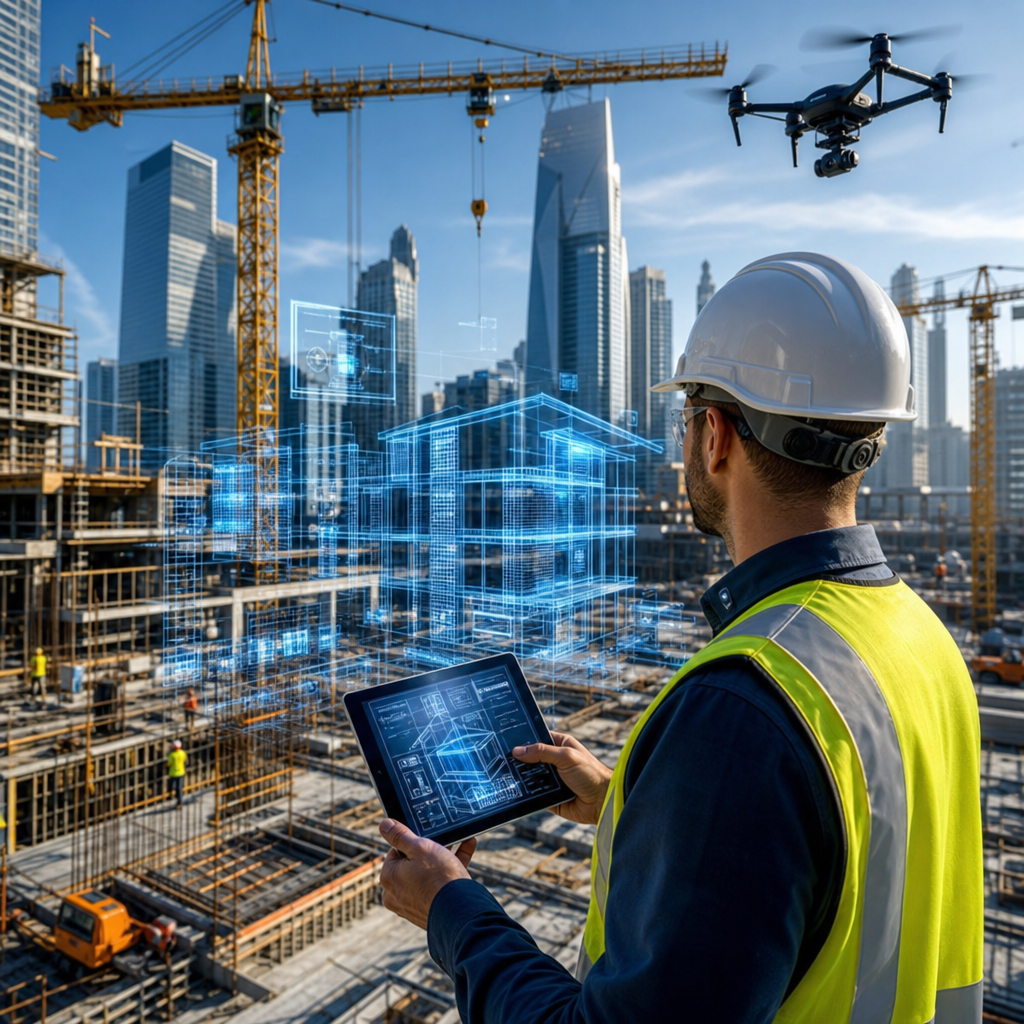
How AI Is Transforming Construction: Smarter Coordination, Early Risk Detection, and Fewer Delays — with Cyber Safety Built In
Construction has always been a high-stakes balancing act. On any major project, dozens of teams work from different plans, under tight schedules, with shifting material deliveries, labor constraints, weather risks, and constant pressure to stay on budget. One missed handoff or late design change can ripple through the entire job, creating delays, rework, and cost overruns that quickly erode margins.
That is exactly why artificial intelligence is becoming such a powerful force in construction.
AI is no longer just a futuristic concept or a back-office experiment. It is increasingly becoming a practical coordination layer that helps construction firms plan better, spot problems earlier, and make faster decisions. Its value is especially clear in three areas: project coordination, early risk detection, and reducing delays, rework, and cost overruns.
But there is a catch: as construction becomes more digital, it also becomes more exposed. AI tools rely on connected systems, shared data, mobile devices, cloud platforms, sensors, and vendor integrations. That means any AI strategy in construction must include a cyber safety plan from day one.
The winning model is not just smarter construction. It is smarter and safer construction.
Why AI fits construction so well
Construction is one of the most complex industries in the economy. Projects typically involve developers, general contractors, subcontractors, architects, engineers, suppliers, inspectors, and lenders. Each group has its own systems, priorities, and timelines, which often leads to fragmented communication and delayed visibility into what is really happening on the jobsite.
AI is well suited to this environment because it can process large volumes of information faster than humans can. It can pull signals from schedules, daily reports, RFIs, procurement data, progress photos, field logs, and design documents, then turn that data into actionable insights.
Instead of waiting for problems to surface in weekly meetings or month-end reports, project teams can see warning signs earlier and respond sooner. That shift from reactive management to predictive management is one of the biggest reasons AI is gaining traction in construction.
AI also helps construction leaders make better use of scarce expertise. Experienced project managers and superintendents spend less time sorting through scattered updates and more time solving the issues that matter most. That improves decision-making across the project lifecycle.
In a sector where small timing errors can create expensive downstream consequences, the ability to turn fragmented data into a clearer operational picture is a meaningful advantage.
How AI improves project coordination
Poor coordination is one of the biggest hidden costs in construction. When schedules are not aligned, crews arrive before materials are ready. When design changes do not reach the field in time, work has to be redone. When subcontractors are not sequenced correctly, one delay can stall multiple trades.
AI helps solve this by creating a more connected view of the project.
It can:
– consolidate updates from different teams into one project picture
– flag scheduling conflicts before they become major issues
– identify missing dependencies in the work plan
– summarize field reports and highlight the most important items
– help optimize crew sequencing and equipment allocation
– improve document control so teams work from the latest version
This matters because construction delays are often less about a single dramatic mistake and more about dozens of small coordination failures. AI reduces those failures by making information easier to track, compare, and act on.
The result is better alignment across the project team and fewer surprises in the field. With a more accurate view of status, leaders can coordinate labor, materials, equipment, and inspections more effectively.
That kind of coordination is especially valuable on large or multi-phase projects, where one missed dependency can disrupt multiple workstreams at once.
How AI detects risk earlier
One of the most valuable uses of AI in construction is early risk detection. Traditional project controls often identify problems after they have already begun to affect the schedule or budget. AI changes that by scanning for patterns that suggest trouble ahead.
For example, AI can help identify:
– schedule drift
– labor bottlenecks
– materials shortages
– subcontractor underperformance
– safety anomalies
– design clashes
– change-order buildup
– cost variance trends
– cash flow stress signals
This kind of early warning is especially valuable in a high-cost environment. When financing is more expensive and margins are tighter, the cost of delay rises quickly. A project that slips by even a few weeks can face higher labor costs, added overhead, supply chain disruption, and potential claims.
AI does not eliminate risk, but it gives project leaders a better chance to see it coming.
That means teams can intervene earlier, adjust resources, renegotiate timelines, or fix coordination gaps before they become expensive problems. In practice, early detection can also improve safety and quality by flagging abnormal patterns before they escalate into operational failures.
The key is not to treat AI as a replacement for human oversight. It is a decision-support tool that helps teams focus their attention where it is most needed.
How AI reduces delays, rework, and cost overruns
Delays, rework, and overruns are among the most persistent problems in construction. They are also closely linked. A delay can trigger rework. Rework can trigger more delay. Both can push up costs and damage project profitability.
AI helps break that cycle.
Reducing delays
AI improves schedule discipline by identifying where work is likely to slip and why. It can support more accurate sequencing, better labor planning, and faster responses to disruptions. That helps keep projects moving.
Reducing rework
Rework is often caused by outdated drawings, miscommunication, design conflicts, or installation errors. AI can compare as-built conditions against plans, detect inconsistencies earlier, and improve quality control. That reduces the likelihood of expensive do-overs.
Reducing cost overruns
When delays and rework fall, costs usually follow. AI helps teams use labor, materials, and equipment more efficiently. It also improves forecasting, which gives owners and contractors a clearer view of where the budget is headed.
The broader economic impact is important too. Faster, more predictable construction can support housing delivery, infrastructure rollout, industrial buildouts, and commercial development timelines. In other words, AI can improve not just individual projects, but the productivity of the sector itself.
For owners and contractors, the main benefit is visibility. When leaders can spot issues sooner and coordinate more effectively, they are better positioned to protect margins and deliver on commitments.
Why cyber safety must be part of the plan
The biggest mistake firms can make is treating AI as a standalone productivity tool. In construction, AI is tied to a broader digital ecosystem that includes cloud software, connected cameras, drones, smart machinery, mobile apps, and third-party vendor platforms.
That creates new cyber risk.
Sensitive construction data may include project schedules, plans, cost estimates, access credentials, vendor records, and safety information. If that data is exposed or manipulated, the consequences can include delays, financial losses, legal disputes, and operational disruption.
A cyber safety plan is essential because AI systems are only as reliable as the data and access controls around them. If an attacker compromises project documents, injects false sensor data, or gains access to a planning platform, the AI may amplify the problem rather than solve it.
Cyber risk also extends beyond data theft. A disruption to scheduling software, procurement systems, or site communications can slow work, confuse crews, and create avoidable downtime. In a business where timing is everything, resilience matters as much as efficiency.
A practical cyber safety plan for AI in construction
A strong cyber safety plan does not have to be complicated, but it does need to be deliberate. The following six pillars provide a useful framework.
1) Secure data governance
Classify sensitive project data, restrict access by role, encrypt data in transit and at rest, and define clear rules for retention and deletion. Teams should know who owns the data, who can view it, and how it is protected.
2) Identity and access management
Use multi-factor authentication, least-privilege access, and regular credential reviews. Remove dormant accounts quickly and monitor subcontractor and vendor access carefully.
3) Secure devices and connected sites
Protect tablets, phones, cameras, drones, sensors, and other connected devices used on the jobsite. Segment networks where possible, patch equipment promptly, and monitor unmanaged devices.
4) Vendor and third-party risk management
Construction projects rely on a web of software providers, subcontractors, and service partners. Firms should assess vendor security practices, audit integrations and APIs, and require minimum cyber standards.
5) AI model governance
Validate data sources, test AI outputs before operational use, track model drift, and keep humans in the loop for critical decisions. AI should support judgment, not replace it.
6) Incident response and resilience
Prepare ransomware response playbooks, back up project data off-network, rehearse downtime procedures, and define communication chains so the team knows what to do if systems are disrupted.
This kind of plan helps ensure that AI improves construction performance without increasing operational vulnerability. It also gives project teams a practical structure for managing risk as digital tools become more embedded in daily operations.
What investors and industry leaders should watch
AI in construction is still an evolving market, but several signals suggest where the opportunity is strongest.
Look for:
– adoption of AI in construction management and project controls software
– partnerships between construction tech firms and cloud or AI providers
– acquisitions in construction software and industrial technology
– stronger commentary on productivity gains in earnings calls
– more spending on digitization and cybersecurity by contractors and developers
– policy support for housing, infrastructure, and permitting reform
The most important question is not whether AI will reach construction. It already has. The real question is which firms can use it to deliver measurable improvements in execution while maintaining cyber resilience.
For industry leaders, the best implementations will likely be those that combine operational discipline with strong governance. That means choosing systems that fit existing workflows, measuring results carefully, and making cybersecurity part of the rollout from the start.
In a sector with thin margins and complex dependencies, the firms that can improve predictability without creating new vulnerabilities are likely to have the strongest long-term advantage.
The bottom line
AI is transforming construction because it addresses some of the industry’s most expensive problems: fragmented coordination, late risk detection, delays, rework, and cost overruns. It helps teams see more, decide faster, and manage projects with greater precision.
But the real opportunity is not just AI. It is secure AI.
Construction firms that pair AI adoption with a strong cyber safety plan will be better positioned to protect data, preserve uptime, reduce disruption, and deliver projects more predictably. That combination — operational intelligence plus cyber resilience — is what will define the next generation of construction performance.
The future of construction is not only AI-powered. It is AI-powered and cyber-safe.