Inflation in Canada 2025 — What Investors Need to Know
Understanding Inflation Trends and Market Implications
In 2025, Canada’s inflation trajectory was characterized by a persistent yet moderate elevation above the Bank of Canada’s 2% target midpoint. The Consumer Price Index (CPI) revealed headline inflation peaked at 2.4% in December 2025 before easing to 2.3% in January and further declining to 1.8% in February 2026. This trend illustrates inflationary pressures that, while slightly above target, remained within manageable bounds and suggested a gradual return to price stability.
Core inflation — which excludes volatile components such as food and energy prices — displayed a softening trend, reinforcing the view that underlying inflation pressures were easing. The annual average CPI inflation for 2025 hovered around 2.1%, slightly above the Bank of Canada’s mandate but consistent with moderate economic growth expectations. These inflation dynamics allowed the central bank to pause interest rate hikes, signaling potential easing ahead as inflation approached the target zone.
Key Inflation Highlights
- Headline Inflation: Peaked at 2.4% (Dec 2025), then declined to 1.8% by Feb 2026.
- Annual Average CPI: Approximately 2.1% for 2025.
- Core Inflation: Trending downward when excluding food and energy volatility.
- Bank of Canada Response: Interest rate hikes paused with possible easing signals.
The Bank of Canada’s monetary policy stance provided a supportive environment for consumer spending, underpinning moderate economic growth estimated between 1.0% and 1.8% through 2026. Investors should monitor inflation metrics closely to anticipate policy shifts that could impact financial markets.
What This Means for Investors
The stable yet slightly elevated inflation environment in 2025 offers several key takeaways for investors seeking to optimize their portfolios:
- Fixed Income Markets: Moderate, stable inflation typically reduces yield volatility, benefiting bonds and fixed-income instruments by preserving purchasing power without triggering aggressive central bank hikes.
- Equities: Investor confidence tends to improve under moderate inflation. Sectors such as consumer discretionary, financials, and real estate generally perform well when borrowing costs stabilize or decline.
- Sector Impacts: Lower and stable interest rates favor the real estate sector by reducing financing costs and support financials through steadier net interest margins.
- Strategic Positioning: A tactical asset allocation focusing on inflation-resilient sectors is recommended. Investors should remain agile, adjusting portfolios in response to monthly CPI updates and central bank policy signals.
By aligning investment strategies with these inflation trends and corresponding policy responses, investors can better navigate economic uncertainties and capitalize on emerging opportunities.
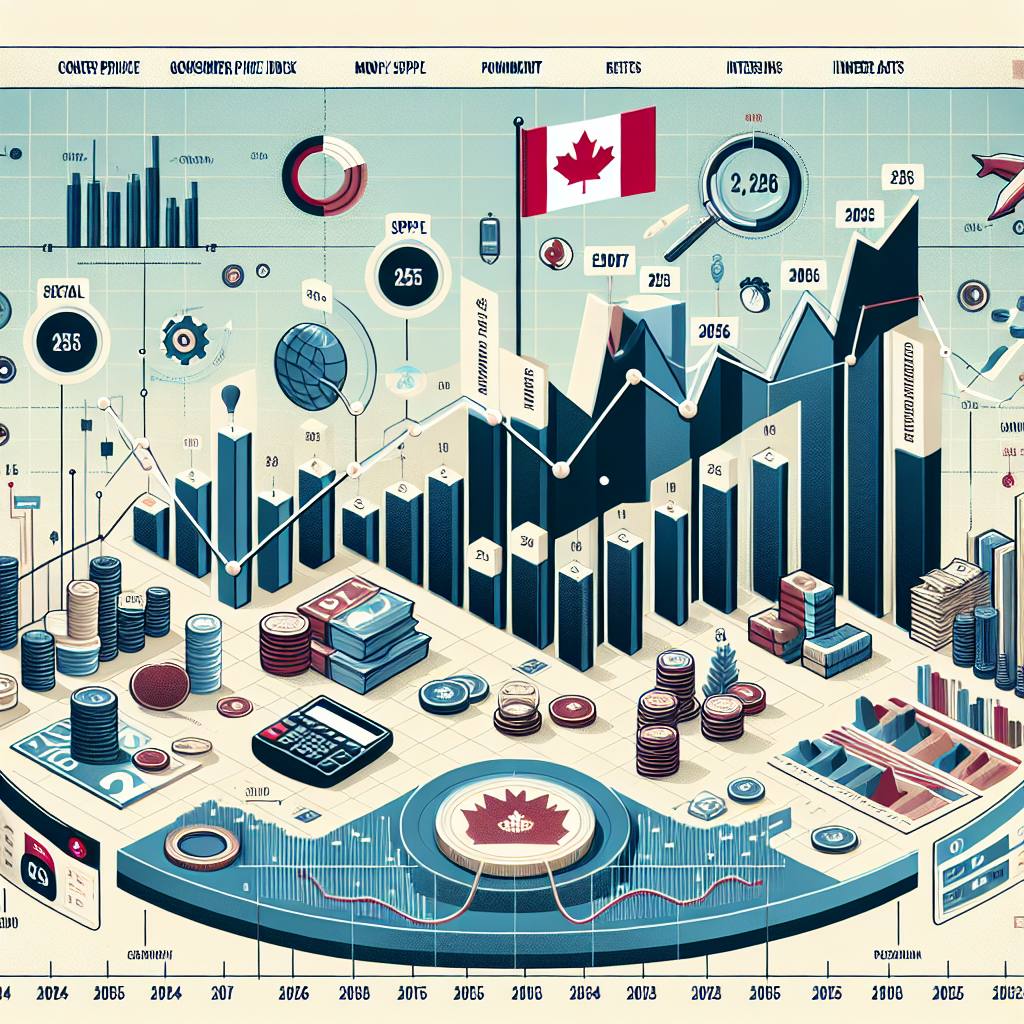
Inflation Rate Trend (Visualized)
(Graph Placeholder: Line graph depicting monthly CPI inflation rates from January 2025 through February 2026)
The line graph illustrates inflation starting near 2% in early 2025, peaking at 2.4% in December 2025, then easing down steadily to 1.8% by February 2026, highlighting the moderation phase.
Bank of Canada Interest Rate Movements (Visualized)
(Graph Placeholder: Bar chart showing steady interest rates throughout 2025 with a pause in hikes during the year)
This bar chart emphasizes the Bank of Canada’s decision to maintain steady interest rates, indicating a cautious yet accommodating monetary policy in response to inflation trends.
Inflation remains a critical market driver, influencing consumer behavior, corporate earnings, and monetary policy decisions. Staying informed through real-time data, expert analysis, and monthly inflation reports can empower investors to make informed decisions and proactively manage portfolio risks in an evolving economic landscape.
LinkedIn Post
📊 Inflation in Canada 2025: Steady Yet Above Target
Canadas inflation rate peaked at 2.4% in December 2025, slightly exceeding the Bank of Canadas 2% target midpoint, but has since eased to 1.8% by early 2026. The Bank of Canada has paused interest rate hikes, creating a supportive environment for economic growth and enhancing investor confidence.
💼 What does this mean for investors?
– Stable inflation supports bonds and equities.
– Real estate and financial sectors exhibit promising prospects.
– Tactical asset allocation focused on inflation-resilient sectors is advisable.
Stay tuned for monthly CPI updates and expert insights to keep your portfolio aligned with market conditions.
Inflation #CanadaEconomy #InvestmentStrategy #BankOfCanada
Visual: Infographic summarizing the Inflation Trend versus Interest Rate Pause, with icons representing key sectors.
Twitter Post
🚨 #Canada Inflation peaked at 2.4% in Dec 2025 but cooled to 1.8% by Feb 2026.
The #BankofCanada pauses rate hikes, supporting growth & market stability.
Fixed income & equity sectors favored.
InvestSmart #Finance #EconomicUpdate
📉 Inflation Trend 📊 Rate Pause
Instagram Post
🔎 Inflation in Canada 2025: What You Need to Know
Peak of 2.4% inflation in Dec ’25 — easing to 1.8% by Feb . The Bank of Canada pauses rate hikes as inflation nears the target.
📈 What?
✨ Stronger bonds 📉
🏠 Real estate boost 💼
💡 Smart sector picks = key to success
Keep pace with inflation updates & invest wisely!
CanadaInflation #Economy #InvestorTips #FinanceInsights
Visual: Bright, colorful infographic featuring upward/downward arrows showing inflation peak and easing with icons for bonds, real estate, and financial sectors.
Multimedia Elements Description
- Blog Post Visualizations: Two professional graphs — a line graph tracking monthly inflation rates from Jan 2025 to Feb 2026, and a bar chart illustrating Bank of Canada interest rate levels with the pause on hikes throughout 2025.
- LinkedIn Infographic: A concise, visually engaging infographic depicting the inflation peak, subsequent easing trend, and the pause in interest rate hikes, anchored by icons representing key investor sectors such as bonds, real estate, and financials.
- Twitter Graphic: A streamlined line graph highlighting key CPI inflation peaks and the rate pause dates for quick viewing.
- Instagram Infographic: A vibrant, mobile-friendly infographic that combines numerical inflation data, directional trend arrows, and sector icons — ideal for fast engagement and easy comprehension on social platforms.
By delivering this comprehensive, clear, and visually enriched content suite, we empower Canadian investors to understand inflation dynamics in 2025 and make informed, strategic investment decisions aligned with evolving economic conditions.