Japan’s Inflation in 2025: Easing Pressures and What Investors Should Watch in 2026
Introduction
Inflation in Japan during 2025 has been marked by a gradual moderation after a period of relatively elevated prices. The Consumer Price Index (CPI) decelerated from 3.0% mid-year to 1.5% by January 2026, marking the lowest inflation rate since March 2022. This shift signals Japan’s move toward a more stabilized price environment, driven by coordinated monetary policies and targeted government subsidies.
This blog post delves into the details of inflation trends throughout 2025, examines the economic and policy factors shaping these changes, and outlines what investors should pay attention to as we move into 2026. Understanding this landscape is crucial for making informed investment decisions in the Japanese market.
Inflation Trends: The Details Behind the Numbers
Japan’s inflation experienced a significant cooling trend over the course of 2025, reflecting both domestic and external economic factors. The annual CPI inflation rate fell from its mid-year peak of around 3.0% to 2.1% in December 2025, before dropping further to 1.5% in January 2026. This marked a notable easing in price pressures, the most pronounced since early 2022.
Core inflation, which excludes volatile fresh food prices, also moderated from near 3.0% to about 2.0%. Food inflation softened to approximately 3.9%, largely due to slower increases in staple prices like rice. Energy inflation remained in negative territory thanks to government interventions such as subsidies that helped reduce electricity and gas costs. However, sectors such as clothing and communications bucked the trend by sustaining steady or slightly higher inflation rates, indicating selective pricing pressures in consumer goods and services.
Visual:
Line chart tracking monthly CPI and Core CPI from January 2025 to January 2026, highlighting the clear downward trend.
Monetary Policy: Bank of Japan’s Steady Hand
Throughout 2025, the Bank of Japan (BOJ) maintained an accommodative monetary policy stance. Committed to keeping inflation near its 2% target, the BOJ balanced its approach by supporting economic growth amid ongoing global uncertainties and headwinds.
The BOJ’s quarterly outlooks have been cautiously optimistic, projecting inflation to continue declining towards 2% in the coming years, buoyed by government subsidies and easing commodity prices. This steady hand has allowed the central bank to avoid aggressive interest rate hikes, maintaining a stable environment for borrowers and investors alike.
This contrasts with many other central banks globally that have tightened policy more aggressively, highlighting Japan’s unique economic challenges such as persistent deflationary pressures in previous decades.
Economic Context and Market Implications
Japan’s overall economic growth in 2025 was relatively stagnant but supported by a tight labor market and moderate wage increases, which helped sustain consumer spending. Government-led subsidies played a pivotal role in keeping energy inflation subdued, providing relief to both businesses and households facing rising costs elsewhere.
For market participants, sectors like apparel and communications, which are showing persistent inflation despite the general cooling, present interesting opportunities for selective investments. These sectors may benefit from pricing power and continued demand resilience.
The benign inflation environment also supports fixed income markets by allowing the BOJ to maintain loose monetary policy without risking runaway price increases. This stabilizes yields, creating a favorable backdrop for bond investors.
However, risks persist. External shocks such as sudden spikes in commodity prices or geopolitical tensions could disrupt the current equilibrium, requiring vigilant monitoring by investors and policymakers.
What Should Investors Do?
Investors navigating Japan’s evolving inflation landscape should adopt a nuanced approach:
- Monitor inflation data releases and BOJ policy statements closely. Sudden deviations from expected trends or changes in policy guidance can impact asset valuations.
- Focus on sectors with persistent inflationary pressures, such as clothing and communications, which may offer better pricing power and returns.
- Align fixed income and equity positions with inflation trends, balancing opportunities from stable yields with the need for risk management in case of unexpected shocks.
- Stay informed on government subsidy programs and commodity price movements, which remain key drivers behind inflation moderation.
By combining macroeconomic insights with sector-specific analysis, investors can better position themselves for the uncertainties and opportunities in Japan’s 2026 market outlook.
In Summary
Japan’s inflation story in 2025 is one of transition—from heightened price pressures toward steady moderation. This shift has been underpinned by the Bank of Japan’s accommodative monetary stance and crucial government subsidies that have helped stabilize energy costs and overall inflation.
As inflation gravitates toward the BOJ’s 2% target over the next year, investors will benefit from staying informed about sector-specific pricing trends, monetary policy signals, and broader economic developments. Doing so will provide a strategic edge in anticipating market movements and optimizing investment portfolios amid Japan’s unique economic landscape.
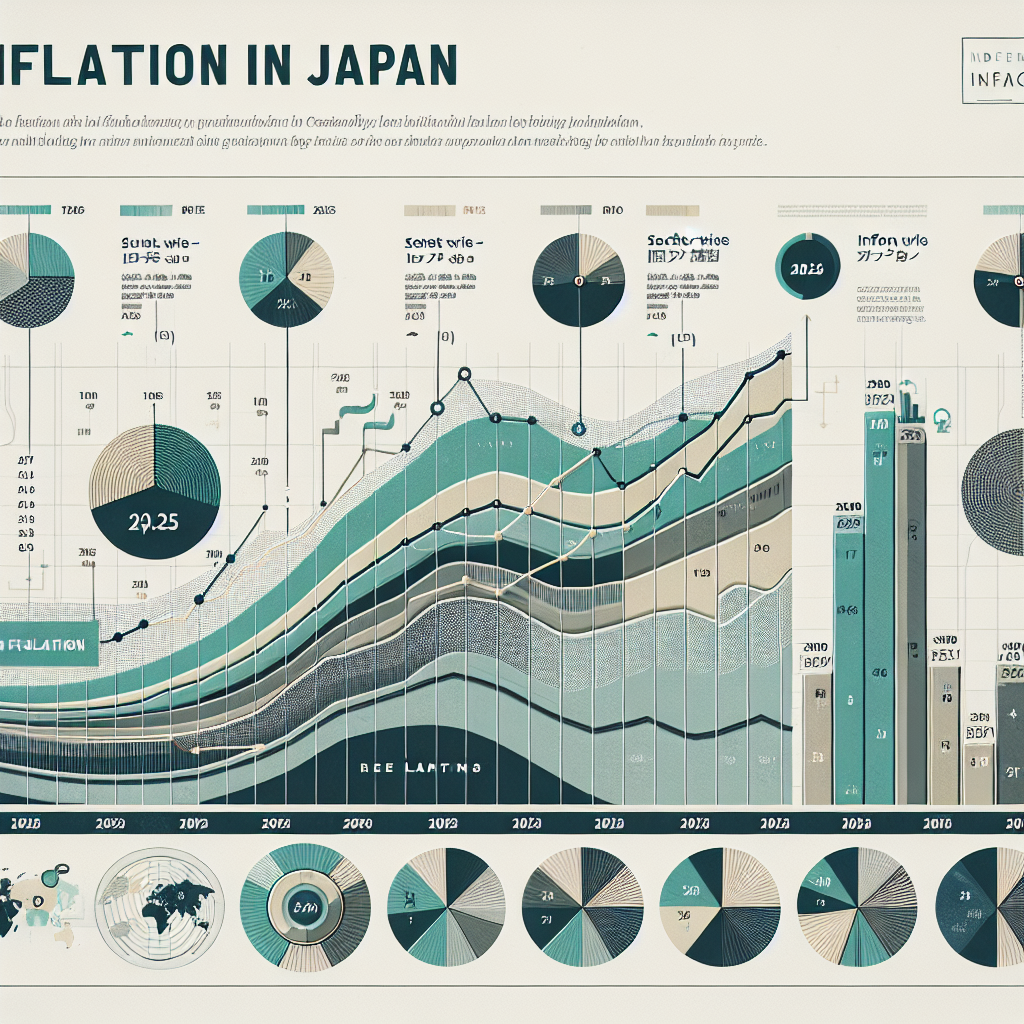
Visual Summary Infographic Concept
- Key Inflation Rates: Comparing CPI, Core CPI, Food, and Energy inflation from mid-2025 to January 2026.
- BOJ Monetary Policy Highlights: Visual timeline of policy stance and outlook through 2025.
- Sector Inflation Snapshot: Focus on Food, Energy, Clothing, and Communications sector trends.
This infographic will serve as an engaging visual tool to translate complex data into accessible insights for all investors.
Social Media Content
LinkedIn Post
Headline:
Japan’s Inflation in 2025: Key Insights & What’s Next for Investors
Text:
Japan’s inflation cooled significantly in 2025, with CPI easing from 3.0% mid-year to 1.5% in January 2026—the lowest since early 2022. The Bank of Japan’s accommodative policy and government subsidies have played pivotal roles in this moderation. While energy and food inflation trends ease, sectors like apparel and communications maintain persistent inflation, offering targeted investment insights. As Japan’s inflation gravitates toward the 2% target in 2026, investors should stay alert to policy signals and sector dynamics.
🔍 Dive deeper with our latest blog post and infographic to navigate these evolving trends effectively.
JapanInflation #EconomicTrends #InvestmentInsights #BOJPolicy #MarketOutlook2026
Visual:
Infographic summarizing Japan 2025 inflation rates, sector inflation, and BOJ monetary policy stance.
Twitter Post
Japan’s inflation cooled in 2025 – CPI from 3.0% mid-year to 1.5% by Jan 2026. BOJ keeps steady on 2% target, energy costs subdued by subsidies. Watch apparel & communications sectors for inflation persistence. Stay tuned for detailed analysis! #JapanInflation #BOJ #InvestmentTips
Visual:
Concise CPI trend line chart with callout highlighting 1.5% inflation in January 2026.
Instagram Post
Caption:
Japan’s inflation eased through 2025, reaching 1.5% in January 2026—the lowest since early 2022. Thanks to the Bank of Japan’s steady policies and government subsidies, key cost pressures like energy are holding down overall inflation. Yet, select sectors like clothing and communications see inflation holding firm. Perfect timing to explore what this means for markets and your investments!
Swipe 449 for our easy-to-understand infographic breaking down the inflation story in 2025.
JapanEconomy #Inflation2025 #InvestmentInsights #BOJ #EconomicTrends
Visual:
Carousel post with three slides:
1. Headline infographic showing overall CPI & core CPI trends
2. Sector inflation snapshot
3. BOJ monetary policy summary and investor tips
This comprehensive and polished content package aligns with our brand voiceclear, insightful, and investor-focusedwhile making complex economic data accessible and actionable across our digital platforms. The use of markdown headers, bullet points, and suggested visuals ensures strong readability and engagement.