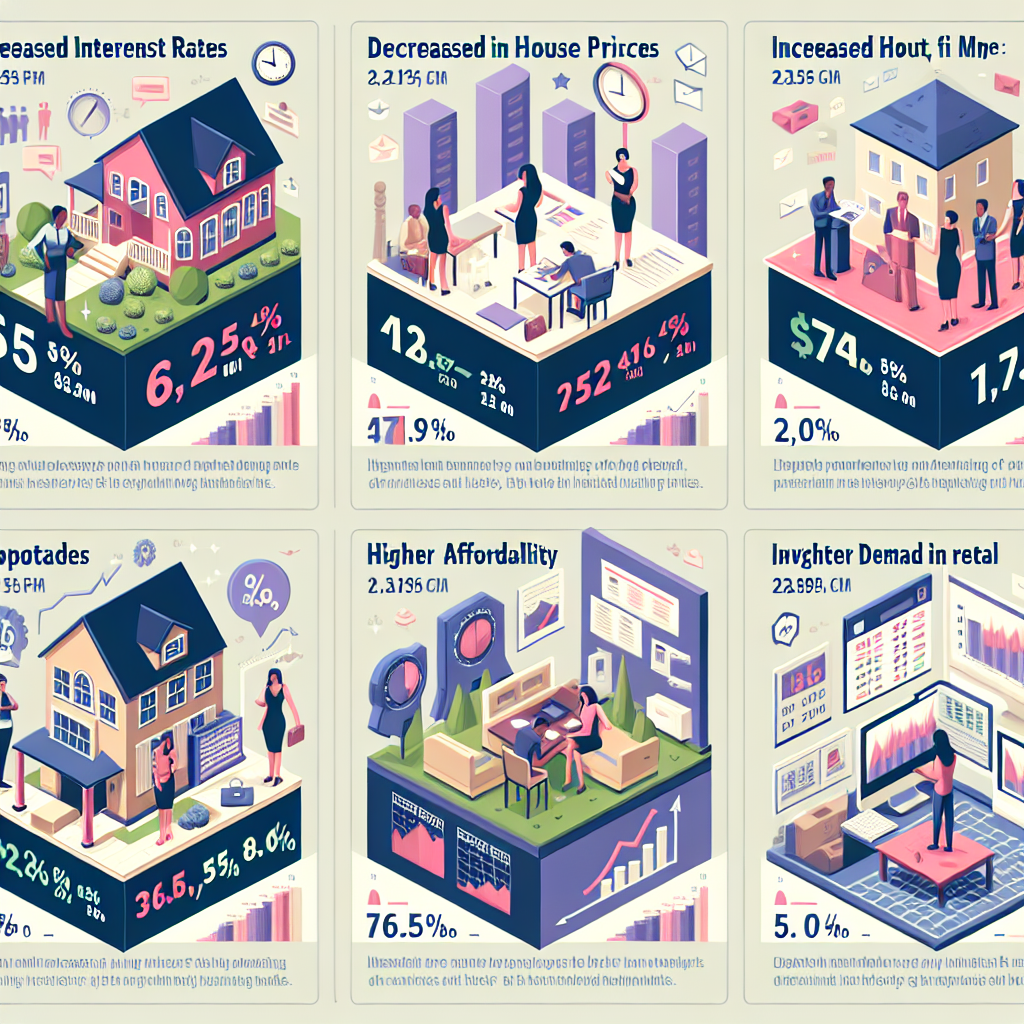
Deciphering the Ripple Effect: The Influence of Lowered Interest Rates on the US Housing Market
Introduction
As the Federal Reserve navigates economic conditions by adjusting interest rates, the implications for the housing market become increasingly pronounced. Lowered interest rates not only reshape mortgage affordability but also alter buyer sentiment and investment strategies. This blog explores the intricate dance between interest rates and the housing market, encapsulating current trends and future predictions.
Current Trends in Interest Rates
In response to inflation pressures, the Federal Reserve has shifted from tightening to cutting rates, with the 30-year mortgage rate recently averaging around 6.75%. While this reflects a welcome decline from the peaks of 8%, it prompts critical questions about broader implications for homebuyers and investors.
Chart: Historical Mortgage Rate Trends
Impact on Housing Market Dynamics
1. Affordability Challenges
- The persistent rise in home prices continues to be a challenge, with the median existing-home price now around $435,300, creating hurdles for potential buyers.
- However, the recent dip in interest rates can ease this burden. For instance, a mortgage of $320,000 at 6.75% translates to a monthly payment of approximately $2,076 compared to $1,919 at a 6% rate, effectively saving buyers over $1,800 annually.
Infographic: Monthly Payment Savings at Different Rates
2. Investor Sentiment
- Lower interest rates often stimulate greater demand, with first-time buyers and investors eager to capitalize on more favorable financing conditions.
- An environment of increased liquidity encourages exploration in the real estate market, with investors eyeing opportunities that previously seemed out of reach.
Patterns and Opportunities
- Increased Demand: Historically, lowered interest rates correlate with heightened demand. However, tight inventory levels present a counterforce, often leading to price increases in desirable regions.
- Strategic Investments: The current market conditions suggest a potential return to stability rather than panic over a housing collapse. Investors with a keen eye can leverage these dynamics for strategic acquisitions, particularly in areas with strong employment growth.
Graph: Demand vs. Inventory Levels
Risks and Economic Indicators
- Inflationary Pressure: Continued high inflation could dampen the positive effects of lowered mortgage rates. If inflation remains elevated, potential rate cuts may not significantly boost market growth, presenting a risk to potential buyers.
- Broader Economic Ties: The synergy between interest rates and stock performance injects further volatility into the housing market. Any shifts in economic conditions could affect both dimensions, highlighting the need for cautious optimism among market participants.
Recommendations for Content Creation
- Visual Elements: Incorporate infographics that depict correlations between interest rates and housing prices, as well as analyses on affordability.
- Real-Life Scenarios: Showcase case studies of buyers navigating the market under changing interest rates, emphasizing trends and outcomes.
- Educational Sections: Develop content that explains the implications of interest rate fluctuations on the economy and housing market, empowering readers with essential knowledge to navigate these changes.
- Risk Discourse: Promote balanced discussions on the potential risks of the current investment climate, offering insights to help readers make informed decisions.
Conclusion
The interaction between lowered interest rates and the housing market reveals a complex tapestry of challenges and opportunities. Market participants must remain informed and agile as conditions evolve. This narrative offers valuable insights for content creators eager to engage readers in discussions about how rate changes influence housing dynamics, enhancing awareness and understanding in an ever-shifting financial landscape.
Visual Aids
- Historical comparison graphs of mortgage rates and home prices.
- Data tables showing monthly payment differences at varying interest rates.
- Engaging infographics summarizing the current housing market climate versus historical trends.